
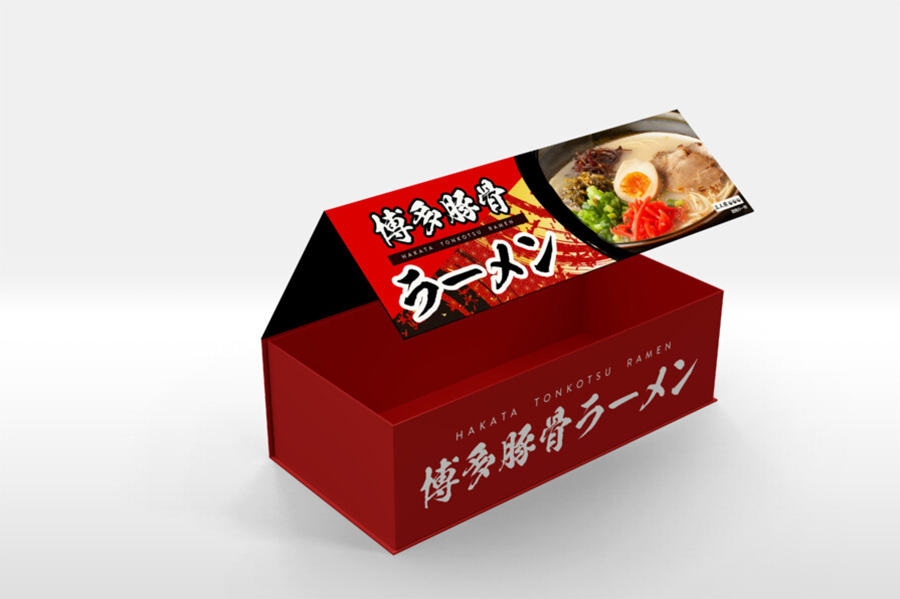
A souvenir ramen box with immediate appetite appeal
This conceptual gift box was designed for Hakata-style tonkotsu ramen. A souvenir package has to identify the regional specialty quickly, protect the contents, and carry some of the energy of the travel experience home.
Deep red gives the box strong visibility, while the black lid frames the product image and calligraphic name. The compact palette keeps the design recognizable even in a busy station or airport shop.
A lid designed to communicate flavor at a glance
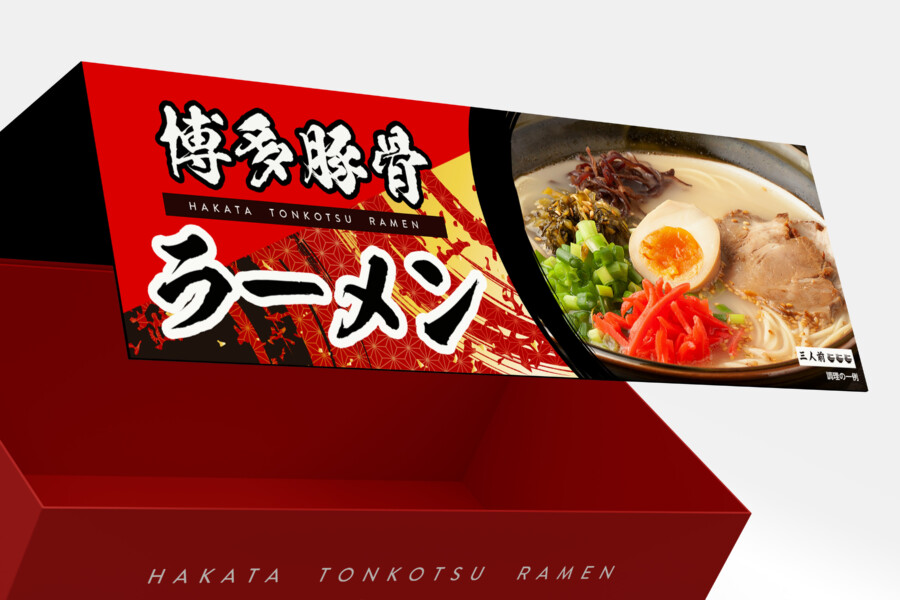
The central image shows the finished ramen with chashu pork, egg, and green onions. Placing it on black increases contrast and lets the warm food colors come forward. The photograph answers the customer’s first practical question—what the prepared dish will look like—before the finer details are read.
Calligraphy gives the regional name a strong voice
The product name uses energetic brush-style lettering to establish character and momentum. Hakata Tonkotsu is positioned prominently so the regional association remains clear rather than becoming a secondary decorative detail.
Balancing gift presentation with retail clarity
Souvenirs are often chosen quickly, but they still need to feel suitable for giving. The sturdy box form and limited color palette provide a composed appearance, while the food image and bold name keep the product approachable.
Side panels remain visible when boxes are stacked
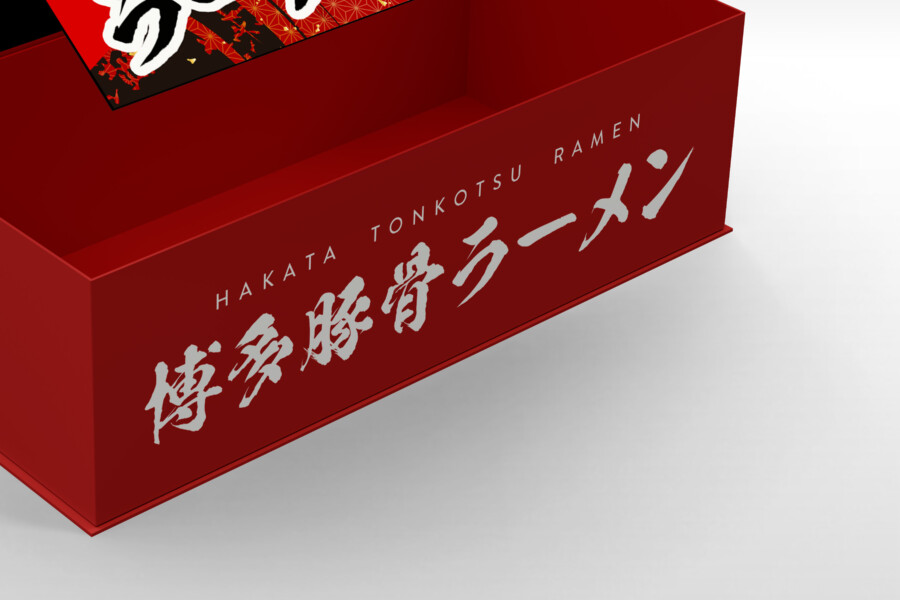
Retail displays frequently reveal only the narrow edge of a box. The red side panel therefore carries the logo in high-contrast white, allowing the product to remain identifiable when the lid is hidden.
A dark interior changes the opening experience
The interior shifts from red to black, separating the outer display from the contents inside. This darker field can help individual noodle and soup packets stand out and gives the opening moment a more deliberate presentation.
Bilingual information broadens recognition
Modern Latin lettering supplements the Japanese calligraphy and identifies the product for visitors who do not read Japanese. The two systems have separate roles: the calligraphy carries brand character, while the English wording provides direct orientation.
This is a conceptual package design sample. Final food photography, product claims, required labeling, box structure, and production specifications would be confirmed for an actual project.
How the package carries a sense of place
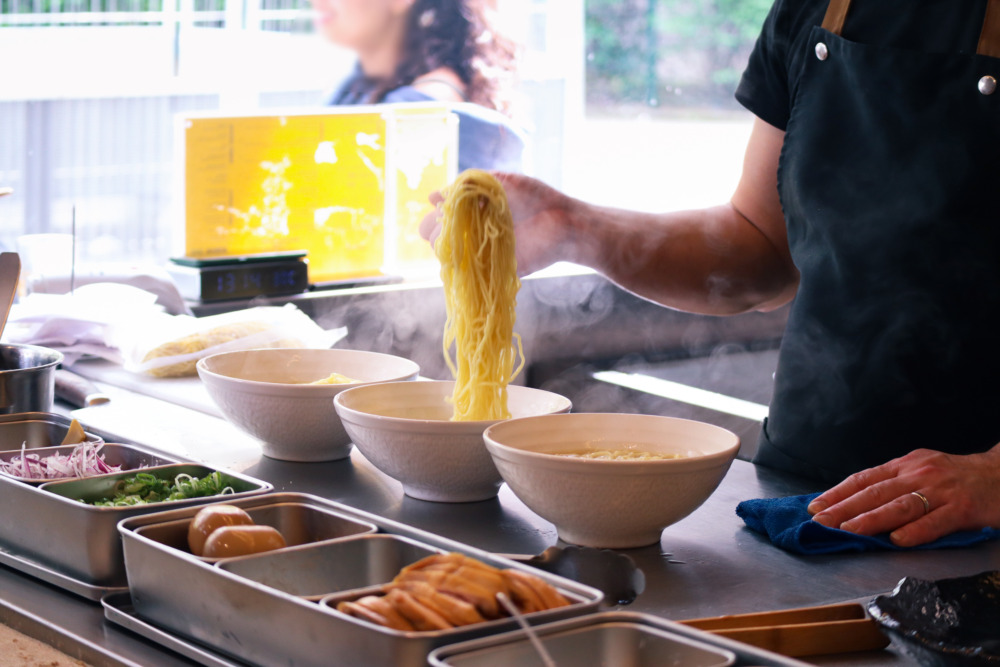
Concept visualization
Red and black suggest the energy of a food stall
The palette can recall the glow of lanterns, dark shop curtains, and the evening atmosphere associated with Hakata’s yatai food stalls. These references support the concept without requiring a literal street-scene illustration.
The product image provides a clear destination
Travel souvenirs often promise the chance to revisit a memorable flavor at home. A direct, well-lit image of the prepared ramen makes that promise easy to understand and balances the more expressive lettering.
The side panel is part of the discovery strategy
The minimal red edge is not an afterthought. It is designed for the real conditions of a crowded shelf, where a simple color-and-logo combination may be more useful than detailed imagery.
For a real product range, flavor or portion variations could be introduced through a controlled accent system while red and black remain the main identifiers. The final layout would also reserve sufficient space for ingredients, allergens, preparation instructions, best-before information, and other approved food-label content.