
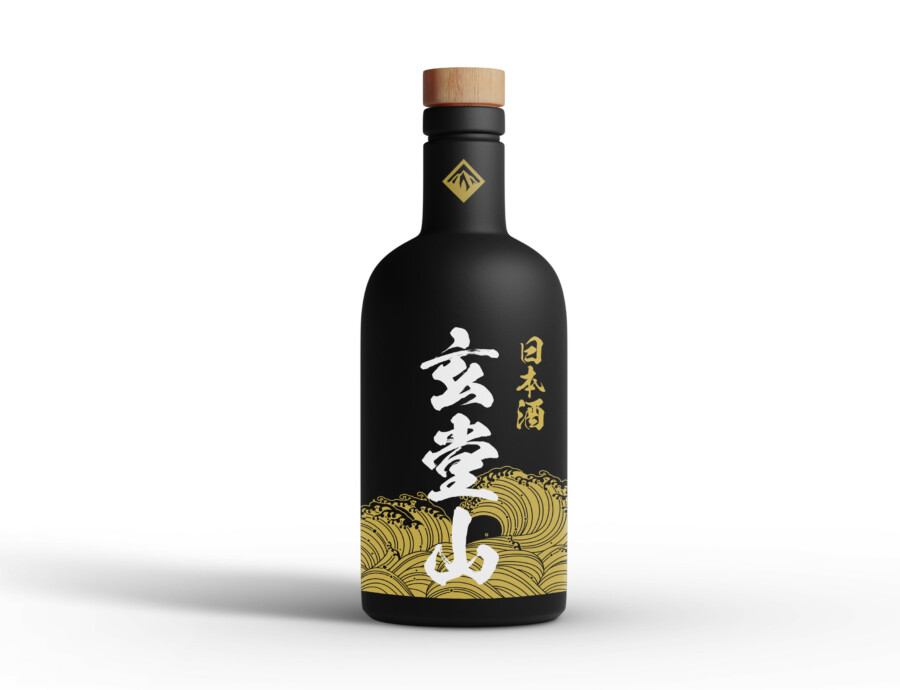
A sake bottle where tradition meets a modern material palette
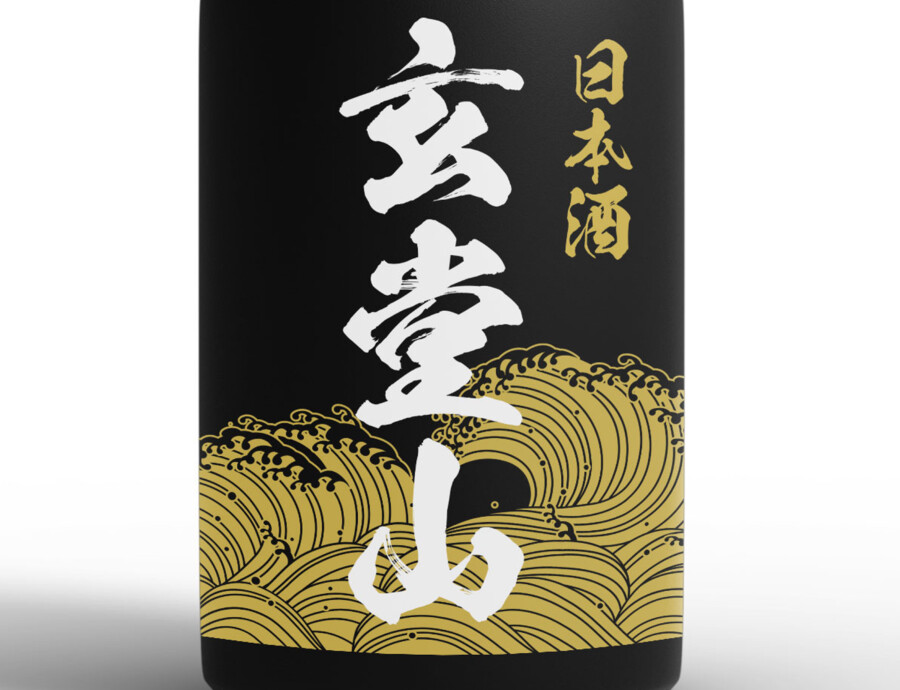
This conceptual sake package combines a matte black bottle, white vertical calligraphy, and a gold wave pattern. The limited palette gives the bottle a strong shelf presence while leaving room for the expressive forms of the lettering and waves.
Traditional references are not reproduced as a historical style. Instead, calligraphy and wave geometry are placed within a contemporary, tightly controlled composition.
Calligraphy and waves create one vertical movement
The product name forms the central axis of the bottle. Golden waves rise from the base and connect visually with the strokes above, directing the eye from the bottom of the bottle toward the neck. The result is energetic without requiring additional illustration.
Matte black, gold, and wood balance cool and warm materials
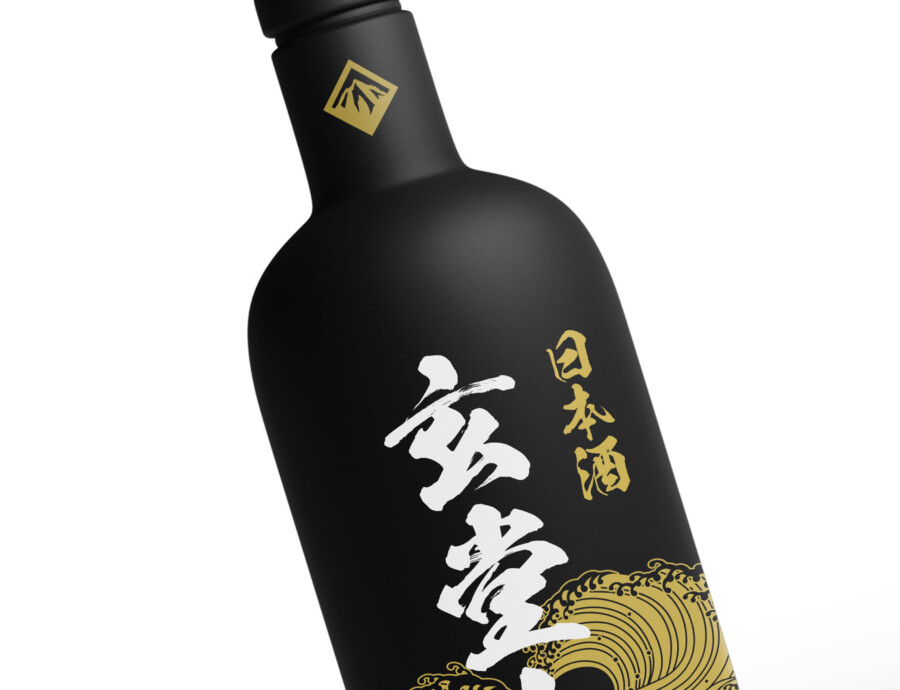
The non-reflective black surface creates a calm foundation. Gold provides controlled contrast, while the wooden cap introduces a warmer tactile note. A small emblem at the neck acts as a secondary point of recognition rather than competing with the main name.
Designing anticipation before the sake is tasted
Packaging cannot communicate flavor literally, but it can set expectations through material, rhythm, and information hierarchy. Here, the dark bottle and restrained color range suggest a composed, gift-oriented product, while the brushwork adds movement and individuality.
Quiet typography supports the expressive name
Functional information is set in a restrained modern typeface beside the calligraphy. The contrast lets each element perform a different role: the product name carries character, while the supporting text remains easy to identify.
A presentation suited to gifting
The bottle was considered as part of an opening experience, not only as an isolated label. Its vertical composition would remain visible in a presentation box, and the black-and-gold palette can coordinate with restrained outer packaging.
This is a conceptual package design sample. Final bottle, closure, label stock, finishes, and legal product information would be confirmed for an actual project.
Three design choices behind the bottle’s character
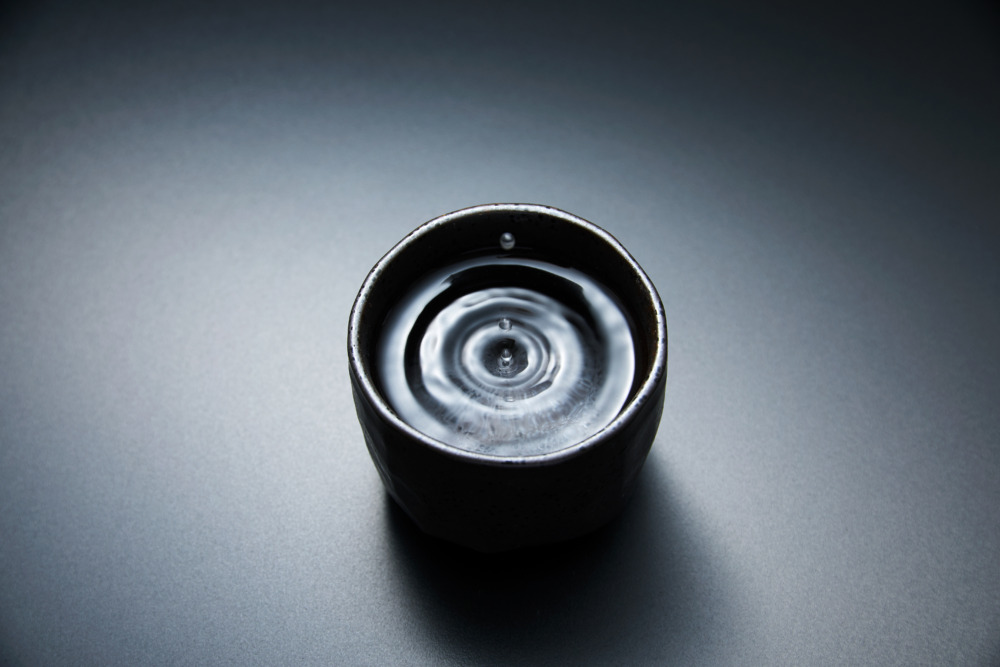
Concept visualization
Waves connect the product to water
Water is fundamental to sake production, so the wave pattern provides a relevant narrative cue. The motif is deliberately dynamic rather than placid, giving the lower part of the bottle energy and a clear visual foundation.
Surface contrast encourages closer inspection
Matte glass absorbs light, the gold details catch it, and the wooden cap adds visible grain. These contrasts help the package work both at shelf distance and when held in the hand.
The small emblem functions as a maker’s mark
The neck emblem recalls the placement of a seal without claiming a historical crest. Because it is small, it reads as a finishing detail and a consistent identifier that could extend to boxes, labels, or other items in the range.
An actual sake project would also need to coordinate this visual direction with the bottle supplier, printer, and approved product information. Label adhesion, curvature, condensation, barcode placement, mandatory alcohol details, and the legibility of small bilingual text should all be tested on the final container rather than judged only from a flat artwork preview.