
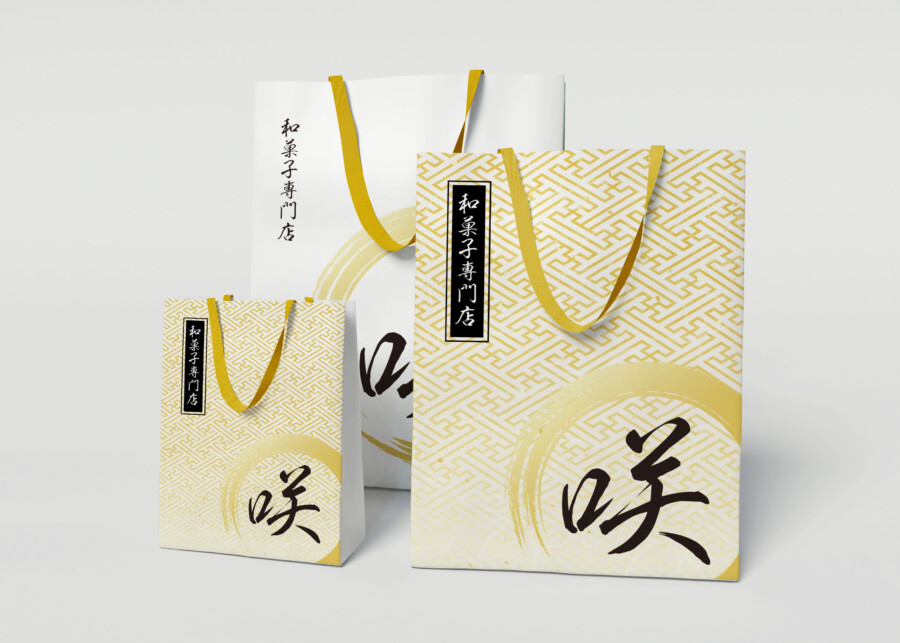
A shopper bag that extends the wagashi gift experience
This conceptual shopper-bag design was created for a specialist wagashi shop. The bag has to carry the purchase, but it also accompanies the customer through the final stages of the experience: leaving the shop, traveling with the gift, and presenting it to someone else.
The composition combines bold calligraphy, a circular brush motif, and a fine gold sayagata pattern. Together they create a formal but contemporary presence suited to traditional confectionery.
A calligraphic character as the central brand motif
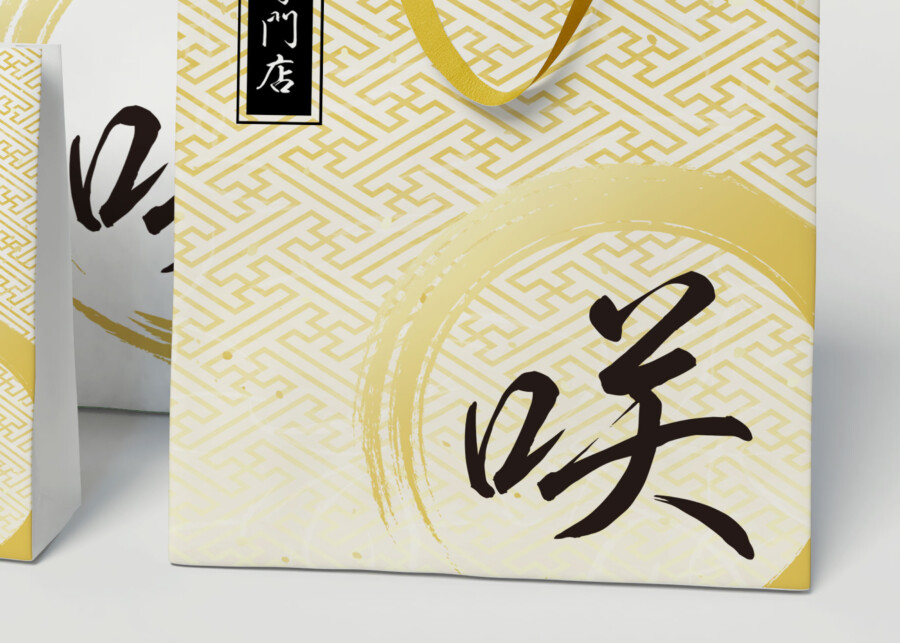
The large character 味 means taste. It is treated as the visual center of the bag rather than as a small label. A broad gold circle behind it frames the brushwork and gives the composition movement while keeping the message concise.
A subtle sayagata ground pattern
Sayagata is an interlocking geometric pattern used in Japanese decorative arts and associated with continuity and good fortune. Here it is printed in a restrained gold tone so that it appears as texture rather than competing with the central mark. The effect changes gently with light and viewing angle.
Black, gold, and white create a flexible brand system
The color palette is intentionally limited. White keeps the bag light, black gives the calligraphy definition, and muted gold introduces a gift-like quality without making every surface reflective.
Gold is used as structure, not only decoration
The circle, pattern, and handles share related gold tones. Repeating the color across different details connects the entire object and helps the bag feel coordinated from a distance.
A compact black panel anchors the information
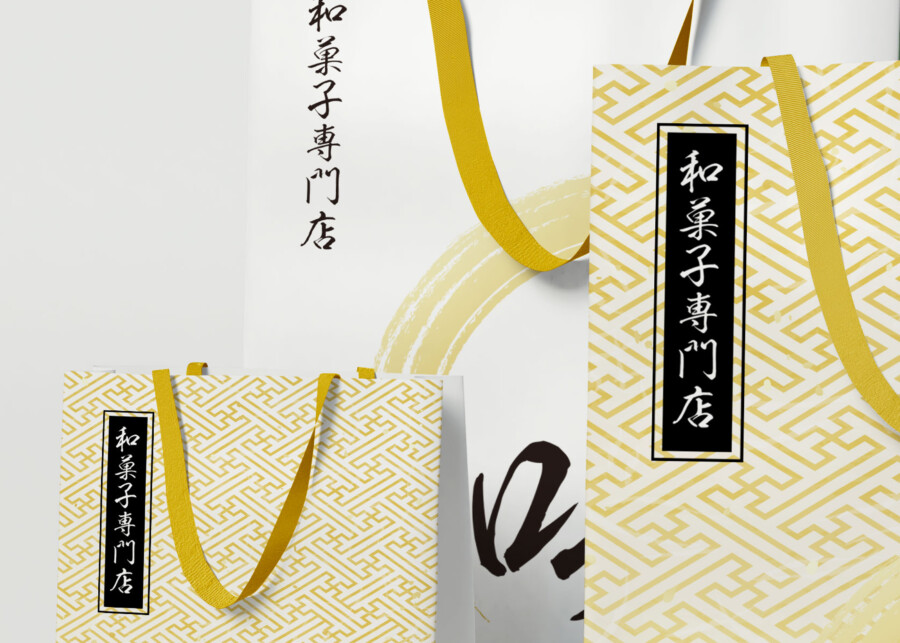
The vertical black panel identifies the shop as a wagashi specialist in a quieter Mincho-style typeface. It provides a stable counterpoint to the expressive central character and gives practical information a clear location.
A plain version creates another level of formality
The second variation removes the ground pattern and relies on open white space. It could be used for a simpler product range or a more casual purchase while retaining the same calligraphic motif and brand recognition.
This is a conceptual package design sample. Final materials, bag sizes, handle specifications, and printing methods would be confirmed for an actual project.
Design details that support the brand story
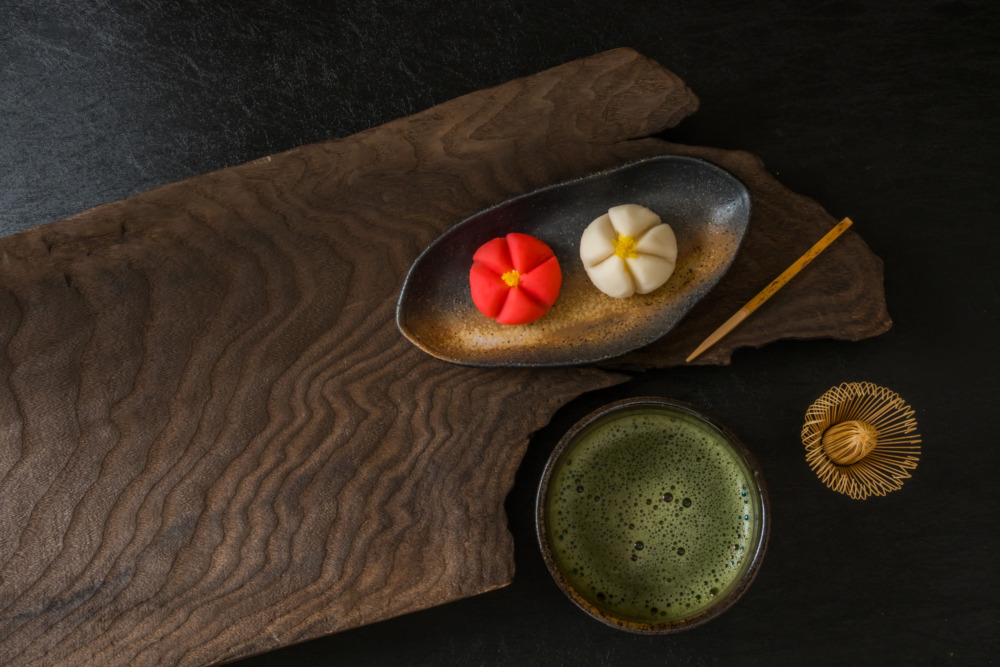
Concept visualization
Brush texture suggests craft
The central character uses visible changes in stroke width and edge texture. That irregularity creates a human quality that relates to confectionery made with careful handwork, while the surrounding geometry keeps the design disciplined.
The auspicious pattern suits gifting occasions
Wagashi are often purchased for celebrations, seasonal greetings, and formal visits. A well-researched traditional pattern can support that context without requiring a long explanation on the package.
One motif can support several packaging levels
Using the same character, circle, and information panel across plain and patterned versions creates a scalable system. Product ranges and occasions can change while the shop remains recognizable. This is more useful than treating every bag size as an unrelated design.
For production, the apparent simplicity would still require careful decisions about paper whiteness, ink density, handle color, and the finish used for gold. Small differences between matte ink, metallic ink, and foil can change the balance considerably. Prototypes should be reviewed under both shop lighting and daylight before the final specification is approved.