
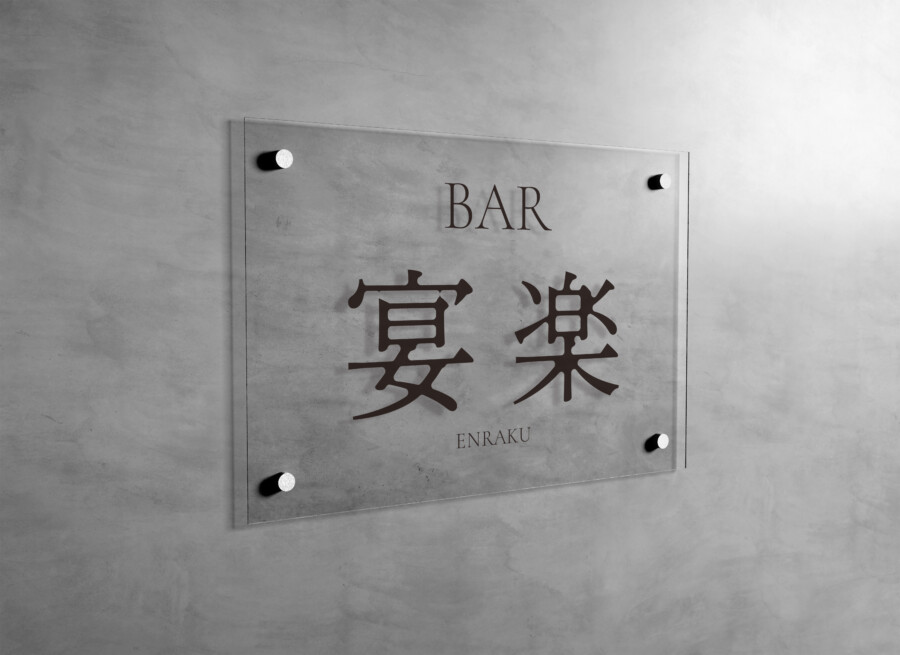
A restrained identity for a quiet modern bar
This conceptual logo was designed for ENRAKU, a bar centered on calm conversation and considered drinks. The Japanese name 宴楽 is drawn as a custom wordmark with a traditional underlying structure and sharply controlled stroke endings.
The design interprets the name—which relates to gathering and enjoyment—through stillness rather than visual noise. This creates a more mature atmosphere and leaves room for the bar interior to shape the complete experience.
Custom kanji give the name a precise tension
The Japanese characters retain the contrast and rhythm associated with brush-based forms, but their edges are refined into a consistent logo. The result feels deliberate and reproducible rather than like an unedited piece of calligraphy.
Latin serif lettering introduces clarity and scale
BAR and ENRAKU use a slender serif typeface. The romanized name provides pronunciation and recognition for guests who do not read Japanese, while its fine proportions balance the weight of the kanji.
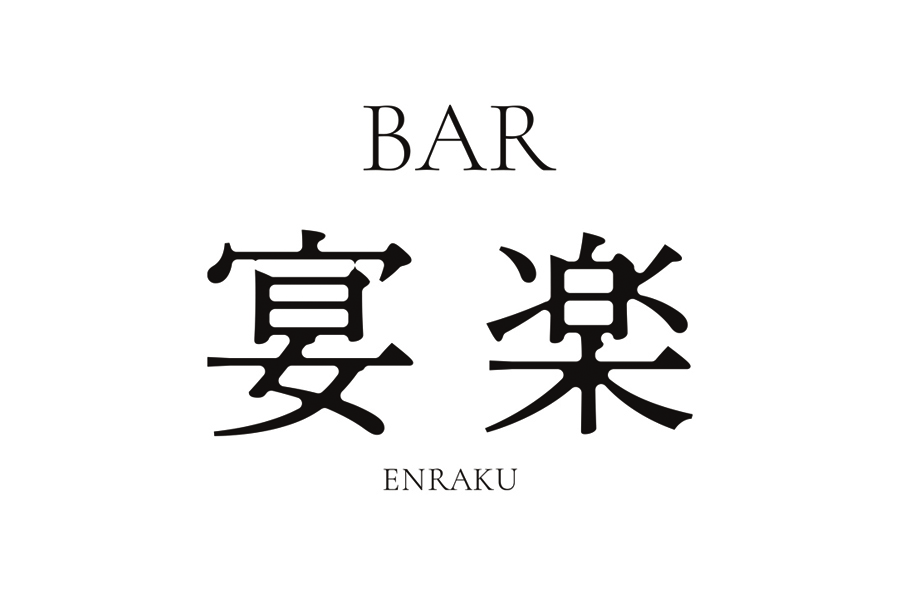
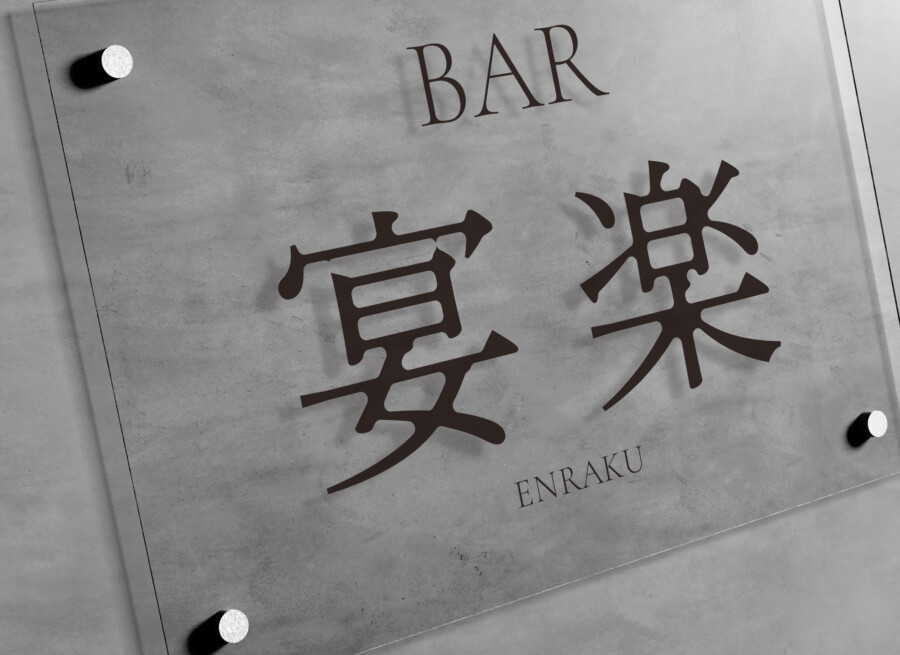
The identity is designed to work with the interior
A hospitality logo does not exist separately from its space. Here, transparent acrylic, dark lettering, and concrete create a cool architectural setting that lets the subtle irregularity of the Japanese name remain visible.
Inorganic materials sharpen the human detail
Concrete and acrylic provide flat, precise surfaces. Against them, the changing stroke widths of the kanji feel warmer and more tactile. This contrast avoids using obvious wood or paper cues to signal Japanese.
Negative space suggests an unhurried pace
Large margins above and below the name keep the plaque from resembling an information board. The spacing creates a composed first impression and allows ambient light and shadow to become part of the application.
The full name and compact wordmark serve different locations
The complete bilingual lockup suits entrances and menus. ENRAKU alone can work on glassware, coasters, or small digital interfaces. Both versions retain the same typographic tone.
This is a conceptual logo design sample. The final business name, lettering, material specifications, and application system would be confirmed for an actual project.
How the bilingual identity carries meaning
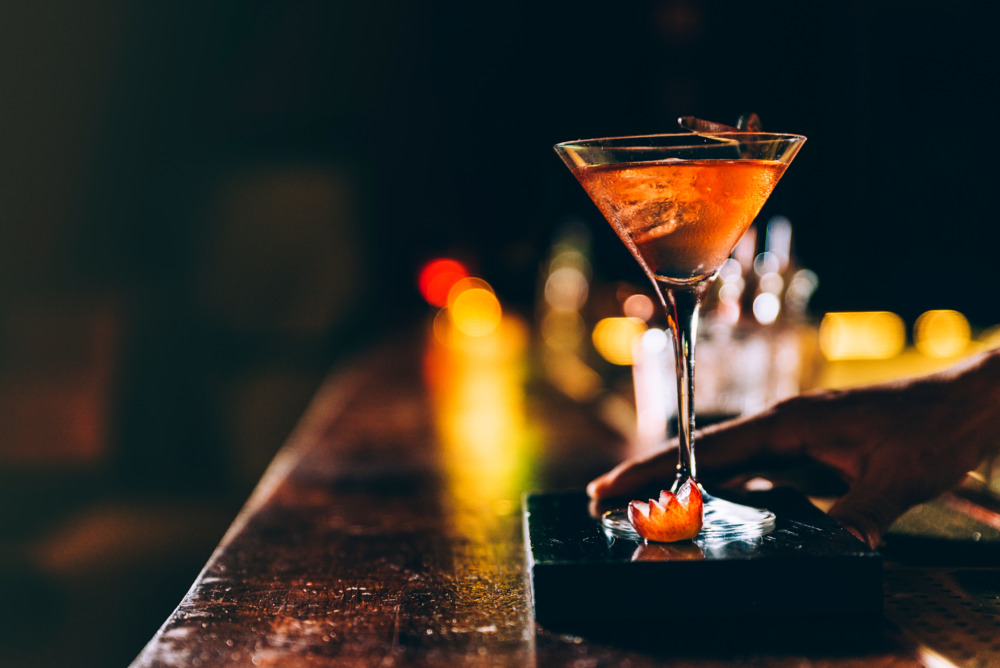
Concept visualization
Romanization acts as a practical bridge
ENRAKU allows international guests to recognize and repeat the name. It does not translate the kanji, but it connects the visual identity with a pronounceable word and makes the brand easier to find online.
The visual tone reframes the lively meaning of the name
宴 and 楽 can evoke gathering and enjoyment. Presenting them through a restrained wordmark positions that enjoyment as measured and intimate rather than loud. This interpretation belongs to the bar concept, not to a universal difference between cultures.
Final testing would include exterior visibility, etched or printed glassware, foil, menu covers, illuminated signs, and low-light digital use. Minimum-size and contrast rules would ensure that the fine Latin lettering remains legible beside the stronger Japanese forms. A compact ENRAKU wordmark would support small applications without reducing the Japanese name to an unreadable size. Signage guidance would preserve sufficient open space around both scripts.