Forging a Brand Logo Where Tradition Resonates with Modernity
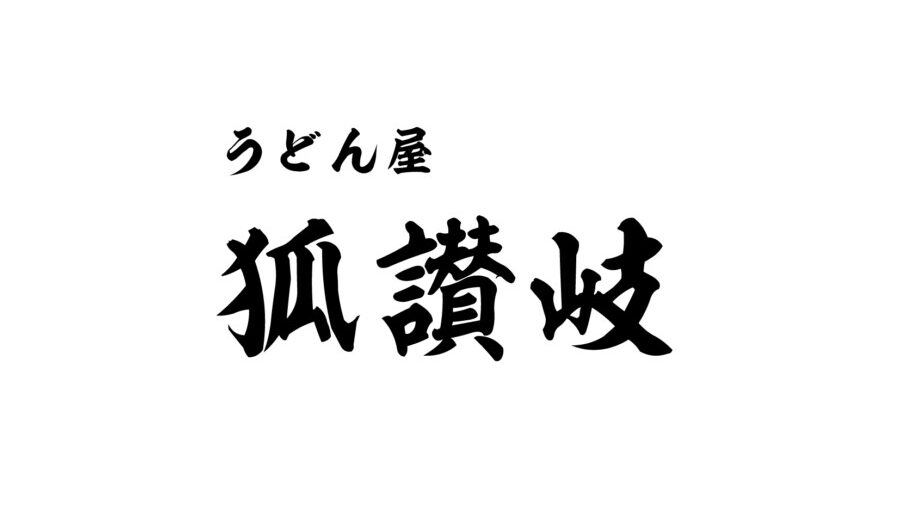
This is a calligraphic logotype designed to be the face of an udon noodle specialty restaurant. The three kanji characters that form the brand name are rendered with a spirit and dynamism that seem to capture the very moment a master artisan forcefully kneads and cuts the noodles. By intentionally incorporating the natural kasure (fading or “scratchiness”) and hane (upward “splashes” or “jumps”) of the ink, the design conveys more than just letters; it communicates the warmth of hand-craftsmanship and a deep commitment to quality in every bowl. While it appears traditional and gives a sense of “dignity” or “prestige” (kaku), this powerful calligraphy also tells a story of the restaurant’s core confidence and unwavering standards.
A Balance of Motion and Stillness
The main logotype possesses an almost wild sense of “motion.” In deliberate contrast, the descriptor text (“Udon Shop”) placed above it is set in a “static,” simple, and modern typeface. This font, similar to a rounded, highly legible sans-serif, adds a contemporary and approachable feel. If this descriptor had also been written in a matching calligraphic style, the entire logo might have felt too old-fashioned or overly formal. This intentional contrast between two different typefaces creates a sophisticated sharpness and balance, expressing an establishment that honors tradition while remaining open and accessible to a modern audience.
The Inherent Strength of a Monochrome Design
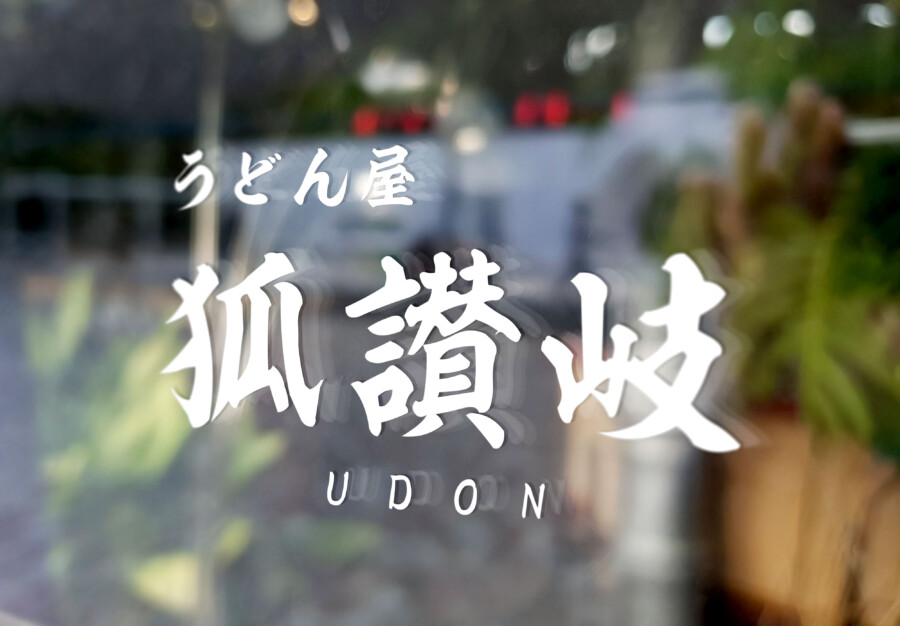
The foundational design is a simple, striking composition of black ink on a white background. This not only offers the functional benefit of being easily adaptable to any medium, but it also serves as proof of the design’s high conceptual “strength.” It doesn’t rely on color or excessive decoration to convey the restaurant’s worldview; the form of the characters, the weight of the lines, and the balance of the layout are powerful enough on their own. Whether on shop curtains (noren), ceramics, business cards, or a website, the presence of this mark builds a consistent and unwavering brand image in the customer’s mind.


Creating a Premium Worldview Through Application
A logo’s true value is tested not in isolation, but in how it is applied. When expanded across a brand’s various tools and materials, its worldview deepens significantly.
Brushstrokes Symbolizing the Noodles
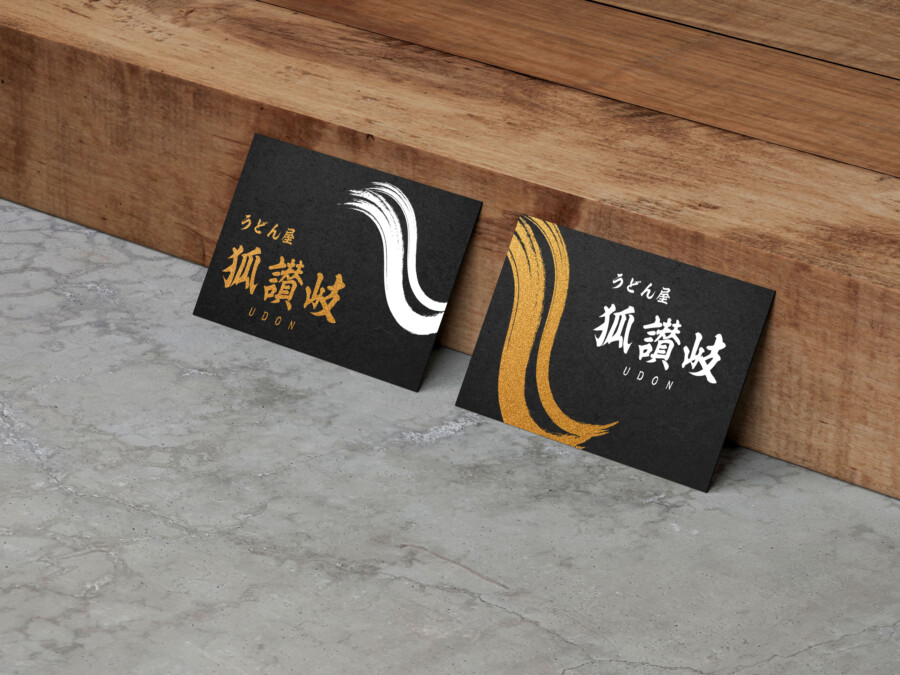
In the application examples, the two bold brushstrokes on the left are particularly eye-catching. These are not mere decoration; they are a direct symbol of the udon noodles themselves—glossy, firm, and resilient (koshi), as if just lifted from hot water. They echo the powerful touch of the main logotype while adding an even more dynamic and fluid sense of “movement.” This motif makes the restaurant’s specialty instantly and intuitively understood. The logotype and the motif work in unison, becoming a highly effective design element that reinforces the brand’s story.
The Elegance of a Black, White, and Gold Palette
By placing the logo on a black background, a different expression emerges—one that is more “premium” and “modern” than the original design. The black background makes the white lettering or the gold metallic ink stand out, creating a dignified tension and a sense of luxury. The examples show two variations: one in white and one in gold. The white version feels clean, crisp, and pure. The gold, on the other hand, adds a “special occasion” feel and a traditional Japanese splendor. One can imagine using white for everyday items and gold for special announcements. This flexibility to express a different “class” or “feel” just by changing colors and materials is one of the hallmarks of a design built to last.
This logo design is a sample.
For logo design requests, please contact us using the contact form.
Beyond the Brushstrokes: The Deeper Meaning in the Characters

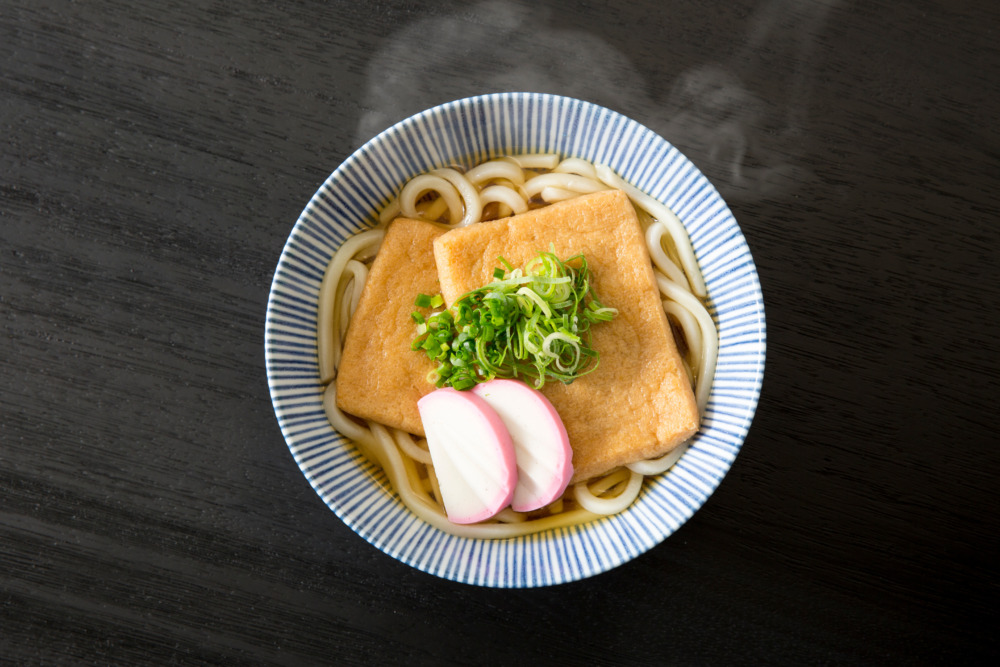
*Conceptual image
In the world of design, the “meaning” embedded within a visual is just as important as its “style.” This logo is a perfect embodiment of both.
For an international audience, in particular, understanding the meaning behind the kanji (the Japanese characters) used in this logo can reveal a much deeper layer of design intent.
1. “Kitsune” and “Sanuki”: A Deep Respect for Udon Culture
This logotype can be read as “Kitsune-Sanuki.” It’s a clever name that combines two incredibly important keywords from Japanese udon culture.
- What is “Kitsune” (狐)? : In Japan, udon topped with sweet-simmered fried tofu (called abura-age) is known as “Kitsune Udon.” This name comes from an old folk belief that foxes (kitsune) love fried tofu. It is one of the most popular and beloved classic udon dishes. This single character, “Kitsune,” thus implies “a traditional, beloved flavor.”
- What is “Sanuki” (讃岐)? : “Sanuki” is the old name for Kagawa Prefecture, a region so famous for its udon that it’s nicknamed “Udon Prefecture.” The “Sanuki Udon” brand is renowned throughout Japan, particularly for the strong, chewy, and resilient texture of its noodles—a quality known as koshi. These two characters, “Sanuki,” therefore symbolize “the authentic quality and technique of udon’s heartland.”
In short, the name “Kitsune-Sanuki” itself is a powerful declaration of the shop’s identity: A specialty restaurant serving traditional, delicious udon made with authentic, masterful techniques.
2. The Artisan’s “Voice,” Conveyed Through Calligraphy
This logo is not based on a digital font but on sho, or Japanese calligraphy, created by a master calligrapher.
While standard computer fonts often feel “quiet” and uniform, sho directly expresses the artist’s energy and emotion. The characters in this logo convey more than just elegance; you can feel the artisan’s passion, confidence, and even the “live” energy of the very moment the noodles are being kneaded and cut.
It serves as a visual “voice,” communicating the restaurant’s “unwavering confidence in its quality” without needing words. This “voice” is what builds trust, assuring the customer that “this place is authentic.”
3. Bridging “Authenticity” and “Accessibility”
The true brilliance of this logo design lies in the contrast between this powerful calligraphy and the modern, simple sans-serif typeface used for the words 「うどん屋」 (Udon Shop) above it.
- What if everything had been written in calligraphy? : It might have felt too traditional, perhaps even a bit intimidating or unapproachable (a concept known in Japanese as shikii ga takai, or “a high threshold”).
- Conversely, what if it were all set in a modern sans-serif? : It would feel clean, but it would fail to stand out from countless other shops and would not convey a sense of “craft” or “authenticity” (kodawari).
This logo masterfully combines the best of both worlds:
- The powerful calligraphy conveys “authentic technique,” “tradition,” and “expertise.”
- The simple “Udon Shop” text conveys “a modern establishment,” “clarity,” and “friendliness.”
For an international audience interested in Japanese culture, this design sends the ideal message: it signals an accessible shop where you can experience authentic Japanese craftsmanship. This is the power of a design that bridges tradition and modernity.