

A wagashi gift box shaped by texture and restraint
This conceptual package was created for wagashi, traditional Japanese confectionery inspired by temari thread balls. The design needed to convey the care associated with a gift while remaining contemporary and visually quiet.
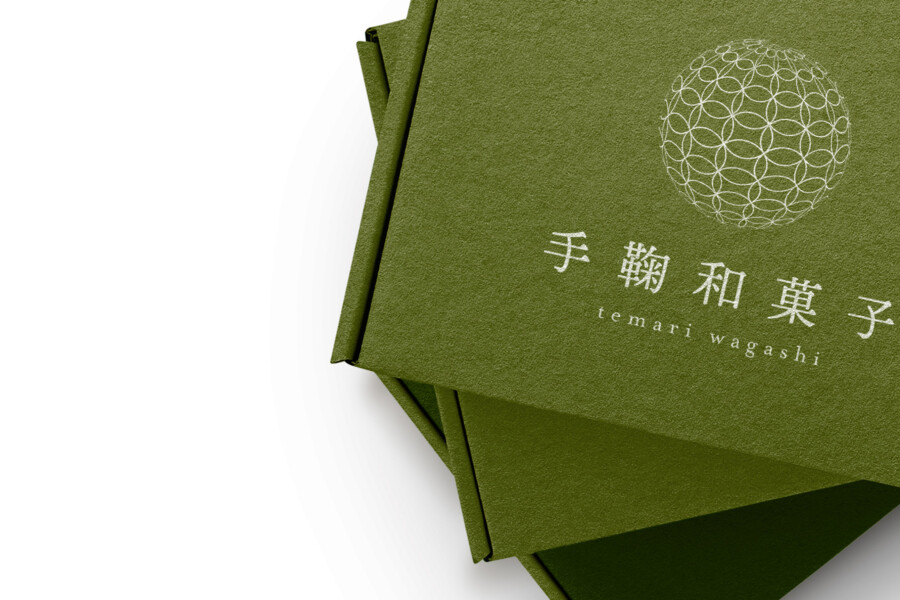
Rather than covering the box with decorative elements, the concept relies on three carefully coordinated details: deep matcha green paper, a fine white shippo pattern, and a restrained Japanese logotype. Together they give the package a distinctive presence before the box is even opened.
Deep matcha green as the foundation
The rich green is carried by the paper itself instead of being treated only as a printed background. Its subdued tone recalls tea and natural materials without making the reference overly literal. The result feels grounded, calm, and appropriate for a premium confectionery gift.
A shippo pattern that echoes the product
The spherical mark on the lid is based on shippo, a traditional Japanese pattern made from overlapping circles. Its geometry connects naturally with the round form of temari and with the idea of continuity. Drawing the motif in fine white lines keeps it light and precise against the substantial green surface.
A Mincho-style logotype with a quiet presence
The Japanese product name uses a slender Mincho-style letterform rather than expressive brush calligraphy. The contrast between strong vertical strokes and fine horizontal details brings formality without making the design feel heavy. Small Latin lettering adds a contemporary note and supports recognition for audiences who do not read Japanese.
Letting the material do the work
The tactile quality of the paper is a central part of the design. Its visible fibers and matte surface suggest warmth and craft, while the minimal printing allows those qualities to remain noticeable. This is a reductive approach, but not an empty one: each remaining element has a clear role.
Negative space strengthens color and texture
Most of the lid is intentionally left unprinted. This generous space directs attention to the depth of the green paper and gives the small white mark greater visual importance. Adding more copy or ornament would reduce that contrast and make the package feel more conventional.
Designed around the act of giving
Wagashi are often selected as gifts, so the package needs to support the moment of presentation as well as protect the product. The restrained surface leaves room for a ribbon, paper band, or furoshiki wrapping without creating visual competition. Its role is to frame the care represented by the confectionery inside.
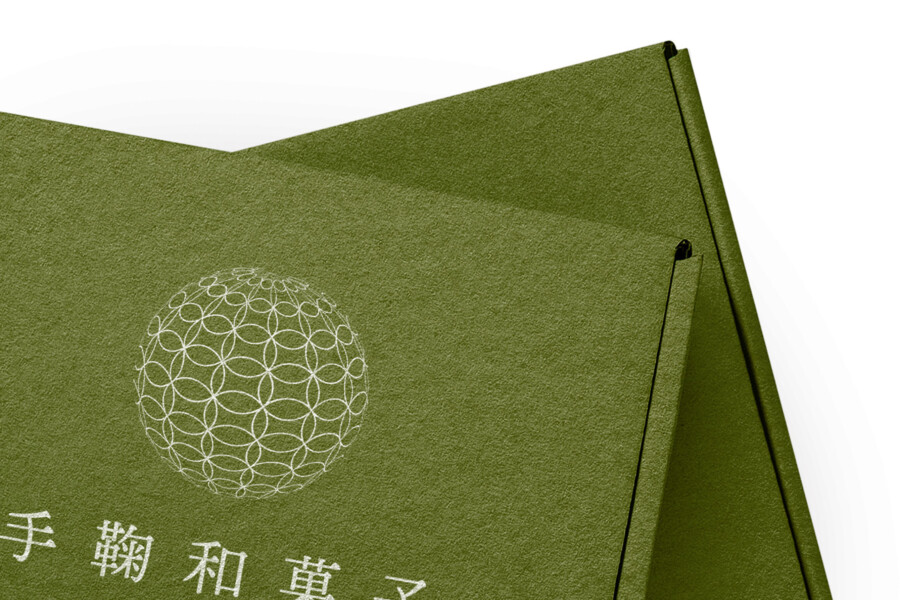
This is a conceptual package design sample. Final materials, dimensions, and production specifications would be confirmed for an actual project.
Why the package feels premium
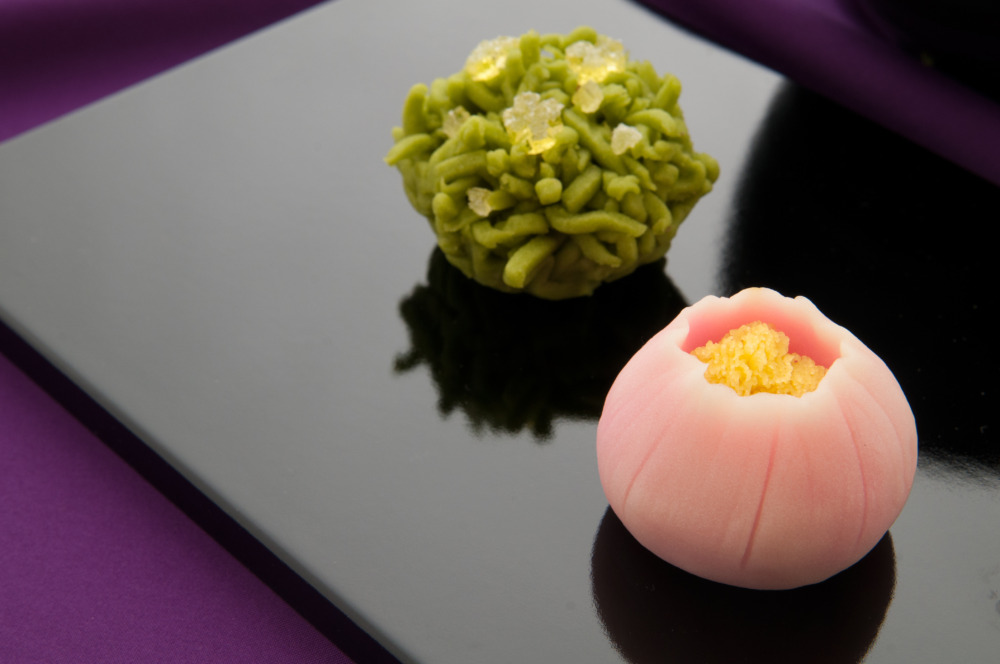
Concept visualization
The premium quality comes from coordination rather than ornament. Paper color, surface texture, line weight, typography, and spacing all support the same calm visual direction.
Color is part of the material
Using deep green paper stock creates a richer and more tactile result than printing a large field of green ink on white paper. Fine white printing then sits clearly on the surface, producing a subtle contrast between the natural texture of the stock and the smoother printed details.
The fine pattern hints at the delicacy inside
The shippo sphere is drawn as an open network of thin lines rather than a solid emblem. This gives the mark a thread-like lightness that reflects the temari concept. The contrast between the substantial box and the delicate motif quietly suggests the relationship between protective packaging and finely made confectionery.
A coherent experience from shelf to opening
The box remains recognizable from a distance through its distinctive color, yet rewards closer inspection through texture and fine linework. That balance helps the design work at several moments: when displayed, when handed to the recipient, and when opened.