
A noodle-shop symbol designed for instant recognition
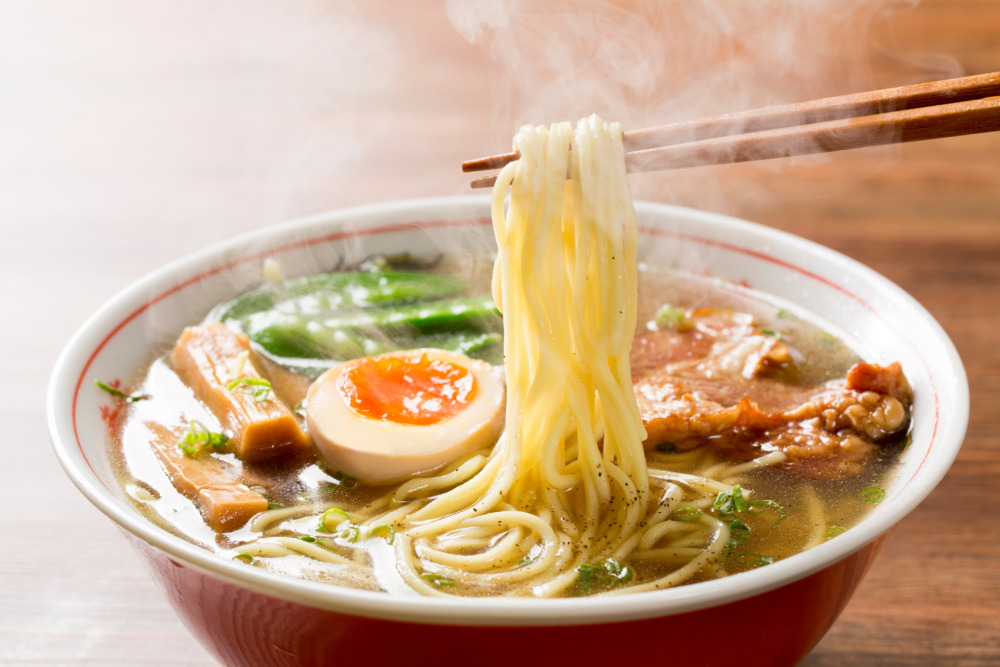
This conceptual logo reduces the familiar action of lifting hot noodles with chopsticks into a compact square mark. Curved lines suggest both noodles and steam, while the character 麺 identifies the specialty directly.
The design avoids realistic food imagery. Its bold geometry is intended to remain memorable on signs, bowls, takeaway packaging, stamps, and small digital icons.
Steam and noodles share one rhythmic form
Wavy yellow and beige lines rise beside the chopsticks. The simplified curves create movement and appetite appeal without requiring a detailed bowl illustration. Straight chopsticks provide a useful counterpoint to the flowing shapes.
A custom 麺 character gives the mark stability
The kanji for noodles is built from thick, squared forms rather than taken directly from a standard font. Its visual weight anchors the movement on the opposite side and makes the product category part of the symbol itself.
A color palette between retro warmth and modern clarity
Orange, warm yellow, beige, and black recall the friendly visual language of older Japanese food packaging, but the colors are applied as clean, flat fields. This creates nostalgia without making the mark depend on a vintage illustration style.
The square frame contains the visual energy
The border holds the moving lines and large character together. It also gives the logo a stamp-like silhouette that can be placed easily on round bowls, rectangular labels, or vertical signs.
Supporting text explains the shop’s range
Ramen, Udon, Soba appears below in a neutral sans serif. The main mark creates recognition; the subtext communicates the practical scope. Keeping these roles separate prevents the icon from becoming crowded.
Color and monochrome versions remain related
The design gains warmth from its palette, but its forms do not rely on color to remain identifiable. A one-color version can therefore work for stamps, receipts, uniforms, and restricted printing conditions.
This is a conceptual logo design sample. The final shop name, menu categories, colors, and application rules would be confirmed for an actual project.
Why the mark feels established without imitating a crest
Concept visualization
Simplification makes the action memorable
Noodles, steam, chopsticks, and a category character are reduced to their clearest shapes. Removing surface detail helps the viewer remember the arrangement rather than a generic image of food.
The framed symbol recalls seals through format
A compact square can suggest the practical authority of a stamp or shop mark, especially in a Japanese context. The logo borrows that visual economy without presenting itself as a historical family crest or official seal.
Before launch, the smallest gaps, line weights, and Japanese character would be checked across illuminated signs, packaging labels, chopstick sleeves, delivery apps, and favicon-sized uses. Clear-space and minimum-size rules would keep the energetic mark readable in each setting. A horizontal arrangement and a compact symbol-only version would help the shop adapt to narrow menus and mobile interfaces without squeezing the complete logo. The warm palette would also need defined print and screen values for reliable reproduction.