

A sophisticated brand logo where stillness and motion coexist.
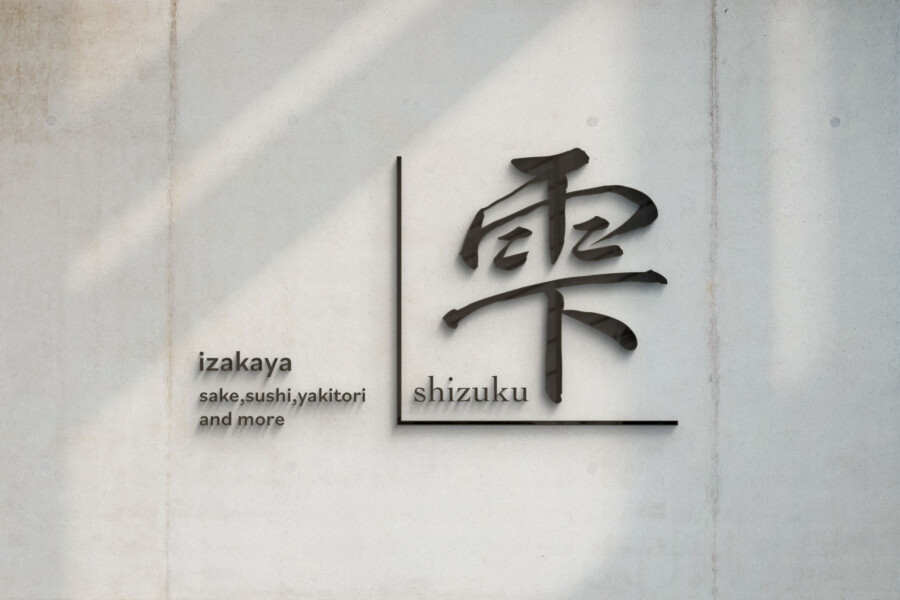
This is a logo design for a modern Japanese izakaya, one that fuses traditional “Wa” (Japanese) elements with contemporary “Yo” (Western) typography. The protagonist is the single calligraphic kanji character on the right. This character, the core of the restaurant’s name, seems to simultaneously capture the “instant of motion” of a liquid droplet and the “quiet ripple” that spreads from it. We feel this single character embodies the two conflicting charms of the establishment: its lively “energy” and the “serene time” for quietly enjoying a drink. It is a design that is simple at first glance, but leaves a deep, lasting impression.
The L-Frame: A Modern Enclosure
The calligraphic kanji is organic and radiates a free, dynamic energy. In this design, that energy is intentionally “framed” or “cut out” by a rigid, L-shaped line on its right and bottom. This frame is evocative of a masu, the traditional square wooden sake box, while also acting as a modern “partition.” This deliberate contrast—”capturing” an emotional, traditional element within a cool, geometric frame—is what gives the logo its unique tension and sophisticated “Japanese Modern” feel.
A Single, Quietly Glowing Point of Red
The logo is composed almost entirely in monochrome (black). Amidst this, a single spot of vibrant “red” is used for the romanized spelling of the name. This “accent color” functions as a highly effective focal point. It feels like the glow of an andon (a traditional paper lantern) in a dark room, or perhaps it symbolizes a single “droplet” of sake. We feel this small point of red gives the entire logo a sense of “warmth” and “emotional depth.”
A Calculated Layout That Separates Information and Emotion
This logo is constructed with a clear division of roles: the “right side” conveys emotional imagery, while the “left side” delivers concrete information. This asymmetrical balance is the source of the design’s unique character.
Clean Typography for Clear Information
On the logo’s left side, the business category “izakaya” is set in a bold, clear sans-serif font. Below it, the specific offerings (sake, sushi, yakitori…) are listed in a smaller, yet highly legible, typeface. This section is, in sharp contrast to the calligraphy, purely “functional.” This clean information design ensures that all guests, including those from overseas, can instantly understand “what kind of place this is.” It shows a “coolness” in its design philosophy, balancing the emotional aspect with clarity.
Harmony in Application: Design Meets Material
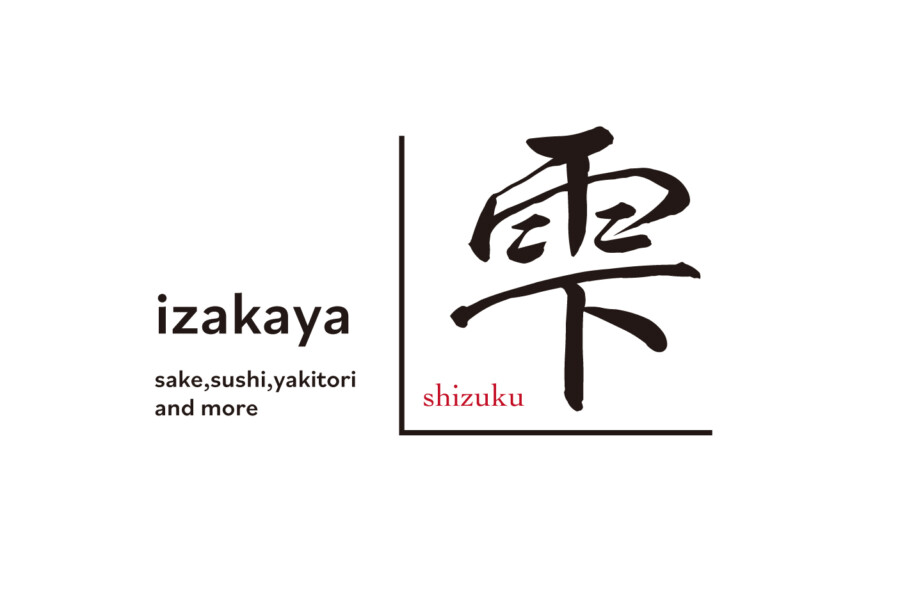
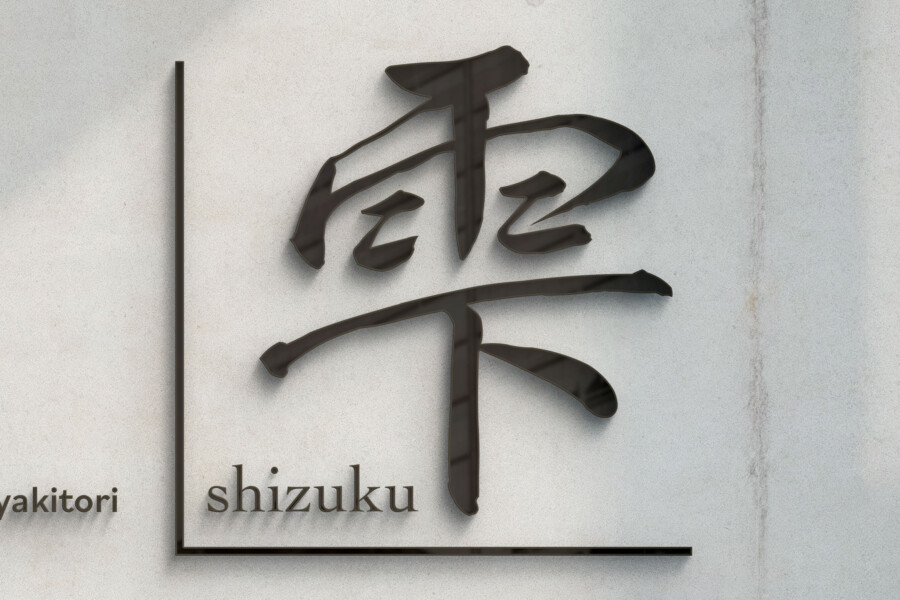
This logo is designed to be deployed on a variety of materials. In the mockup, for example, it is shown on a transparent acrylic (or glass) plaque, mounted on a modern, industrial concrete wall. The logo’s characters “float” slightly off the wall, casting a delicate shadow that creates a “sense of dimension” and a “premium feel.” The combination of these disparate elements—the “warm,” analog motif of calligraphy and the “cold,” modern materials of concrete and acrylic—allows the logo’s worldview to permeate the entire space, elevating the quality of the atmosphere itself.
This logo design is a sample.
For logo design requests, please contact us using the contact form.
“To Be Read” vs. “To Be Felt”: The Meaning of the Boundary Line
*Conceptual image
The previous analysis noted that this logo is clearly divided by function: the “right side for emotion” and the “left side for information.”
Here, we will explore why this logo deliberately “separates” these two worlds rather than fusing them, and consider the role of that dividing “boundary line,” especially from the perspective of an English-speaking viewer.
The Left Side: Typography as a “Guide”
First, let’s look at the text on the left: “izakaya” and “sake, sushi, yakitori.” As noted, this serves a highly “functional” role.
What’s crucial here is the choice of typeface. It is not a font designed to “look Japanese,” but rather a clean, modern, and internationally readable sans-serif.
This is an act of design “hospitality.” It allows international visitors, or those unfamiliar with Japanese culture, to instantly and accurately understand “what kind of place this is” without any anxiety. It perfectly fulfills its role as a “guide” or “information board.”
The Right Side: Calligraphy as “Art”
On the right side, we have the calligraphic kanji 「雫」 (shizuku), symbolizing the restaurant’s name.
For many English speakers, this character is not “text” to be read, but an “art piece” or “visual symbol” to be felt. From its organic flow, ink density, and overall form, they intuitively receive emotional cues like “Japanese,” “craftsmanship,” “serenity,” and “quality.”
The small, red Romanized “shizuku” beneath it acts as the single “bridge,” connecting this “art” to its “sound” (the proper name shizuku).
The L-Shaped Line: A “Barrier” Between Two Worlds
The core concept of this logo lies in its use of a sharp, L-shaped line to intentionally “separate” the functional left side from the emotional right side.
This is more than just a “frame” or “divider.” It acts as a “boundary line” (like a kekkai in Japanese) that respects the two different cultural and linguistic worlds.
If these elements had been fused, the Western text might have been forced to look “Japanese,” and the calligraphy might have had to sacrifice its artistry for readability.
By adopting a layout that separates them, the logo allows the left side to achieve 100% functionality and the right side to achieve 100% artistry, with no compromise from either.
The result is like a modern museum exhibit: the functional “information plaque” (the Western text) is placed on the left, while the “artwork itself” (the calligraphy) is given its own space on the right. This calculated “distance” is the very source of the logo’s “Japanese Modern” sophistication and its strategic method for accurately conveying Japanese aesthetics to a global audience.