
Calligraphy and cherry blossom for a contemporary Japanese restaurant
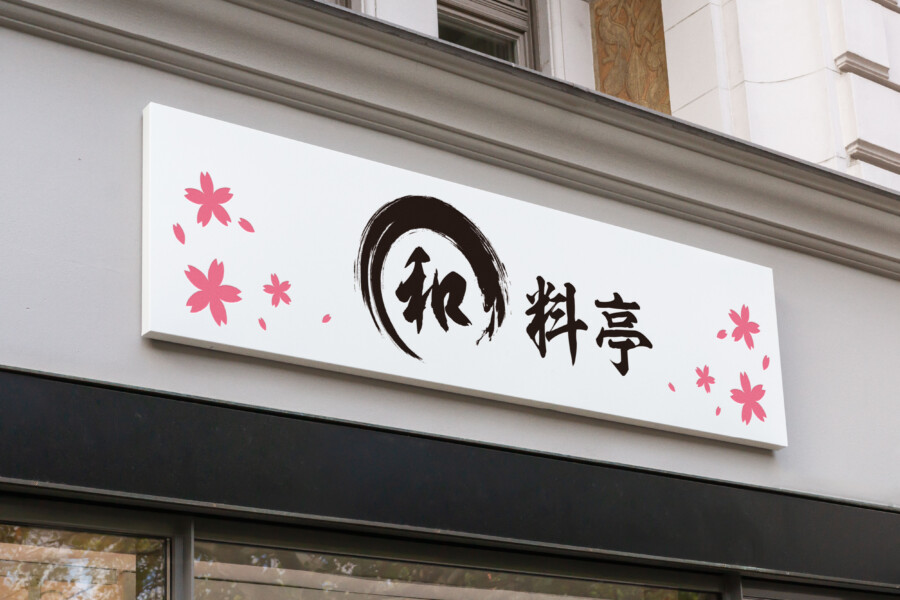
This conceptual logo was designed for a refined Japanese restaurant. A broad circular brushstroke surrounds the central character 和, which can refer to harmony and is also associated with Japan. The mark creates an immediate connection to calligraphy while remaining compact enough for signs, menus, and packaging.
The design does not attempt to reproduce a historical crest. Instead, it combines an ensō-inspired circle, controlled restaurant-name lettering, and a small cherry-blossom accent within a contemporary identity.
Motion and stillness share the same composition
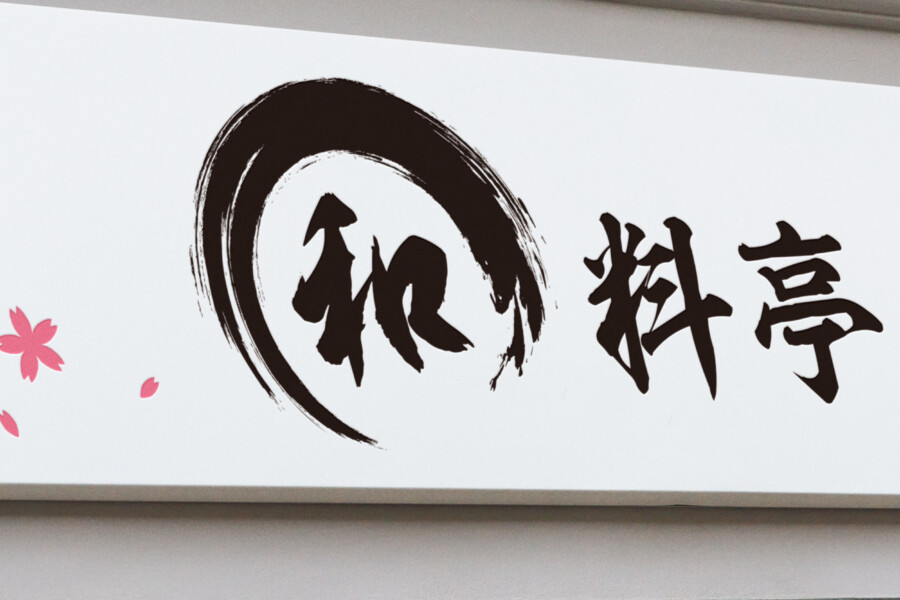
The circle and central character contain visible changes in pressure, ink density, and stroke speed. The supporting restaurant name is more orderly and restrained. This contrast allows the symbol to carry energy while the name remains stable and legible.
Negative space protects the dignity of the mark
The circle, name, and blossoms are separated by generous open areas. That spacing keeps the brushwork from feeling heavy and allows the logo to sit comfortably on a bright storefront surface. The empty field is therefore part of the composition rather than unused space.
Black and pale pink create an approachable formality
Calligraphic black gives the identity weight and clarity. Used alone, however, the mark could feel severe for a hospitality business. Pale sakura pink introduces warmth without weakening the structural role of the black strokes.
A single accent color keeps the system controlled
Pink is limited to small blossoms, so it works as a point of emphasis rather than a competing brand color. The restricted palette also makes it easier to reproduce the identity consistently across printed and environmental applications.
Graphic silhouettes keep the floral motif contemporary
The blossoms are simplified instead of rendered botanically. Their irregular spacing suggests movement and seasonality, while the flat shapes remain compatible with the bold calligraphy. This avoids turning the logo into a decorative illustration.
The identity can shift across formal and everyday uses
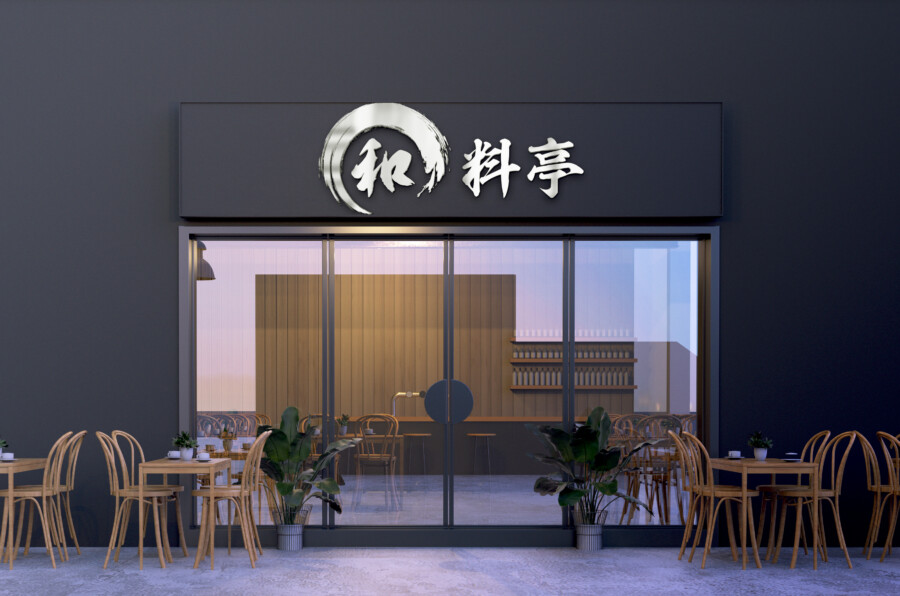
For a premium menu or evening sign, the black mark can appear alone or with a subtle metallic finish. For seasonal communication, the blossom accent can become more visible. The core circle and name remain unchanged, protecting recognition as the applications vary.
This is a conceptual logo design sample. The final name, lettering, colors, materials, and reproduction specifications would be confirmed for an actual project.
Why the cultural references remain readable across audiences

Concept visualization
The brushwork establishes character before the text is read
Viewers who do not read Japanese can still recognize the difference between expressive brush forms and formal supporting lettering. That visual relationship communicates craft and focus without asking the characters to function as decoration alone.
Cherry blossom provides a familiar but restrained seasonal cue
Sakura is widely associated with Japan, so it can help orient an international audience. Because it is used sparingly and in a simplified form, the motif supports the restaurant context without becoming the entire brand story.
At production stage, the finest ink edges, blossom size, and contrast would be tested at the smallest intended use. A strong restaurant identity must remain clear on exterior signage, business cards, menus, reservation interfaces, and monochrome documents—not only in a large presentation mockup.