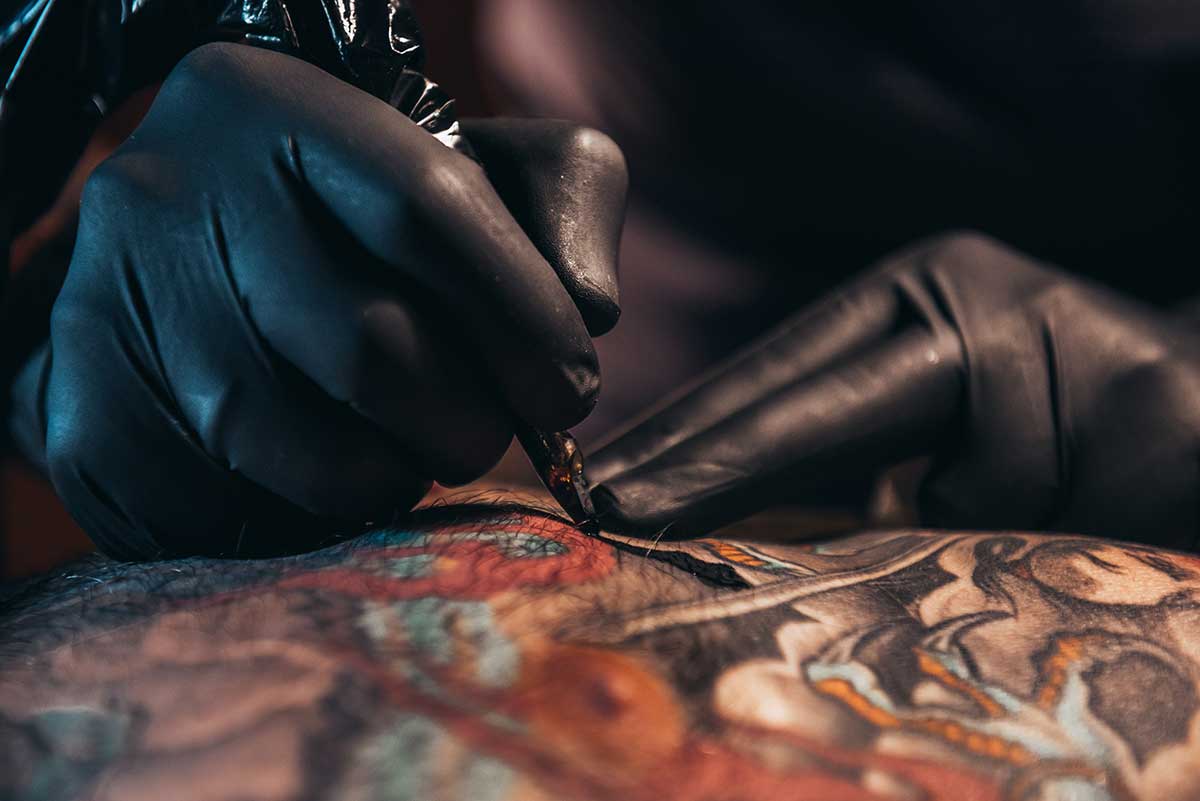
Kanji tattoos remain popular worldwide. They can be beautiful, meaningful, and striking. But they can also go very wrong. This guide covers the most common pitfalls and provides a practical checklist — written by a team based in Japan.
Why Kanji Tattoos Are Risky
A kanji tattoo carries risks that don't exist with tattoos in your native language. You can spot a misspelled English word instantly. But if a kanji character has one stroke out of place or wrong, you likely won't notice — and neither will your tattoo artist, unless they read Japanese.
One Stroke Can Change Everything
Kanji characters are built from specific strokes in specific positions. Moving, adding, or removing a single stroke can transform one character into an entirely different one:
| Intended | Mistake | What Changed |
|---|---|---|
| 大 (big, great) | 犬 (dog) | One dot added at the top right |
| 力 (power, strength) | 刀 (katana, sword) | Stroke angle difference |
| 未 (not yet, future) | 末 (end, tip) | Horizontal stroke length swapped |
| 土 (earth, soil) | 士 (warrior, samurai) | Top vs. bottom stroke longer |
| 白 (white) | 自 (self) | One stroke added at the top |
In each case, both the intended and mistaken characters are real, valid kanji. That's what makes these errors so easy to miss — it's not a nonsense scribble, it's just the wrong word.
Common Categories of Mistakes
1. Translation App Errors
Machine translation tools (including popular ones) frequently produce incorrect or awkward kanji for tattoo purposes. The problem isn't that they're bad translators — it's that tattoo phrases require a level of nuance and context that automated tools usually can't handle.
For example, the English word "strength" could translate to 力 (chikara — physical power), 強さ (tsuyosa — toughness/being strong), or 体力 (tairyoku — stamina), among others. A translation tool might return any of these without context, leaving you with a technically correct but potentially unintended meaning.
2. Mirror/Reversed Characters
If a tattoo design is transferred using a stencil, the image may get reversed. Some characters look very different when flipped. A kanji-literate person can spot this immediately, but if no one in the room reads Japanese, it may go unnoticed until it's permanent.
3. Simplified vs. Traditional Characters
Chinese and Japanese sometimes use different forms of the same character. Simplified Chinese characters (used in mainland China) may look different from their Japanese equivalents. If your reference material comes from a Chinese source, the character forms may differ from what a Japanese reader would expect.
4. Nonsensical Character Combinations
Individual kanji each have meanings, but combining them doesn't always create a meaningful compound. Two "cool-looking" characters placed next to each other might read as gibberish to a Japanese speaker — like picking two random English words (say, "Lamp Volcano") and expecting them to form a meaningful phrase.
A Practical Verification Checklist
If you're seriously considering a kanji tattoo, here's a step-by-step process to minimize risk:
- Start with meaning, not visuals. Decide what you want to express before choosing characters. Don't pick kanji based on how they look alone.
- Get multiple translations. Use at least 2–3 different sources (not just translation apps) to confirm your characters and meaning.
- Have a native speaker verify. This is the most important step. Ask a native Japanese speaker — ideally someone with education beyond the casual level — to confirm that the characters say what you intend and look correct.
- Check the specific forms. Make sure you're using Japanese kanji forms (if that's your intent), not simplified Chinese or other variants.
- Verify stroke accuracy in the design. Once the tattoo artist creates their design, have it verified again. Artists who don't read Japanese may unknowingly alter strokes for aesthetic reasons.
- Consider context and connotation. A character might have a dictionary meaning you like but carry unfortunate connotations, archaic associations, or unintended humor in Japanese. Only a native speaker can catch these.
The Name→Kanji converter on this site is an entertainment tool. We do not recommend using its output for tattoos. The character combinations it generates are algorithmically selected for visual impact and interesting meanings, but they have not been vetted for natural use in Japanese. If you want kanji for a tattoo, please follow the verification process above.
Tattoo Culture in Japan: Context Worth Knowing
It's worth being aware that tattoos carry different social associations in Japan compared to many Western countries. Historically, tattoos in Japan were associated with punishment markings and later with organized crime (yakuza). While attitudes have been gradually changing — especially among younger generations — tattoos can still cause practical issues in Japan:
- Many public baths (onsen), swimming pools, and gyms prohibit entry for people with visible tattoos
- Some workplaces have policies against visible tattoos
- Older generations may have stronger negative associations
This isn't meant to discourage anyone from getting a tattoo — it's simply context that may be relevant if you plan to visit or live in Japan.
Professional Resources
If you're committed to getting kanji for a permanent purpose, consider professional calligraphy or design services. A qualified professional can:
- Confirm linguistic accuracy
- Create properly proportioned characters
- Advise on character combinations that sound natural
- Provide designs in appropriate calligraphic styles
Our parent company AsoboAd is a design studio based in Japan with over 10 years of experience. If you need professionally verified kanji for commercial or personal use, they can help.
Summary
- One wrong stroke can change a kanji's meaning entirely
- Translation apps are not reliable for tattoo-quality kanji
- Native speaker verification is essential — not optional
- Our Name→Kanji tool is for entertainment, not tattoo reference
- Tattoo culture in Japan carries specific social context worth understanding